Saltwater vs Chlorine Hot Tubs: Which Water-Care System Is Better?
Saltwater vs. Chlorine Hot Tubs: Which Water-Care System Is Better?
When shopping for a hot tub, most people focus on the jets, seating, size and comfort. But there’s another important decision that can shape your ownership experience: how you’ll keep the water clean and sanitized.
One of the most common questions we hear at Pioneer Family Pools is whether a saltwater or chlorine hot tub is better. Saltwater systems are known for convenient water care and natural-feeling water, while traditional chlorine systems remain popular for their simplicity, affordability and control over sanitizer levels.
Both approaches can keep your hot tub water clean and comfortable when maintained correctly. The important difference is how they deliver chlorine, what maintenance they require and how much you can expect to spend over time.
In this guide, we’ll compare saltwater vs. chlorine hot tubs, explain how the FreshWater Salt System works, and help Ontario homeowners choose a water-care system that suits their lifestyle.

QUICK ANSWER — It depends on your priorities. Saltwater hot tubs can reduce the frequency of manual chlorine additions and, with systems such as FreshWater, may extend the time between water changes. Traditional chlorine hot tubs generally have a lower initial water-care equipment cost and give owners direct control over sanitizer dosing. Both systems use chlorine and require regular testing, balancing and maintenance.
1. First, Understand the Difference Between Saltwater and Chlorine Hot Tubs
The most important thing to understand is that a saltwater hot tub is not a chlorine-free hot tub.
Both systems rely on chlorine to help sanitize the water. The difference is how that chlorine gets into your spa.
How a Traditional Chlorine Hot Tub Works
In a traditional chlorine hot tub, the owner adds an approved chlorine sanitizer directly to the water. The amount and frequency depend on how often the spa is used, how many people use it and the results of regular water testing.
A traditional water-care routine typically involves testing sanitizer levels, adding chlorine as needed, adjusting pH and alkalinity, cleaning filters and periodically draining and refilling the spa.
How a Saltwater Hot Tub Works
A saltwater hot tub uses a compatible chlorine-generation system. A measured amount of spa salt is added to the water, and the system uses an electrochemical process to generate chlorine from the dissolved salt.
With the FreshWater Salt System, a replaceable titanium cartridge generates chlorine to help maintain sanitized water. Rather than manually supplying all of the chlorine, the owner adjusts the system’s output to match the spa’s needs.
However, a saltwater system does not eliminate maintenance. Owners still need to test and balance water, check chlorine levels, clean filters and make adjustments when required.
2. Saltwater vs Chlorine Hot Tubs: Side-by-Side Comparison
Here’s how the two water-care approaches compare across the factors that matter most to everyday hot tub ownership.
| Comparison factor | Saltwater hot tub | Traditional chlorine hot tub |
|---|---|---|
| Primary sanitizer | Chlorine generated from salt | Chlorine added directly to the water |
| Manual chlorine additions | Generally less frequent; supplemental sanitizer may still be needed | Required as indicated by testing and usage |
| Water feel | Often described as softer or more natural-feeling | Can also feel comfortable when properly balanced |
| Testing and balancing | Still required; check chlorine, pH, alkalinity and other parameters | Still required; check chlorine, pH, alkalinity and other parameters |
| Water replacement | Up to 12 months with properly maintained FreshWater under suitable conditions | Often approximately every 3–4 months, depending on usage and water condition |
| Equipment and supplies | Compatible generator, salt, replacement cartridges and balancing products | Approved chlorine sanitizer, testing supplies and balancing products |
| Initial cost | May be higher due to system equipment or options | Generally lower water-care equipment cost |
| Best suited for | Owners prioritizing convenient sanitizer generation and potentially fewer refills | Owners comfortable with hands-on water care and direct sanitizer dosing |
Note: Water-change intervals are estimates, not guarantees. Spa usage, water chemistry, source-water quality and manufacturer instructions determine the appropriate maintenance routine.
3. Which Hot Tub Water-Care System Requires Less Maintenance?
One of the biggest reasons homeowners consider saltwater is the possibility of spending less time manually adding chlorine. But reduced maintenance is not the same as maintenance-free ownership.
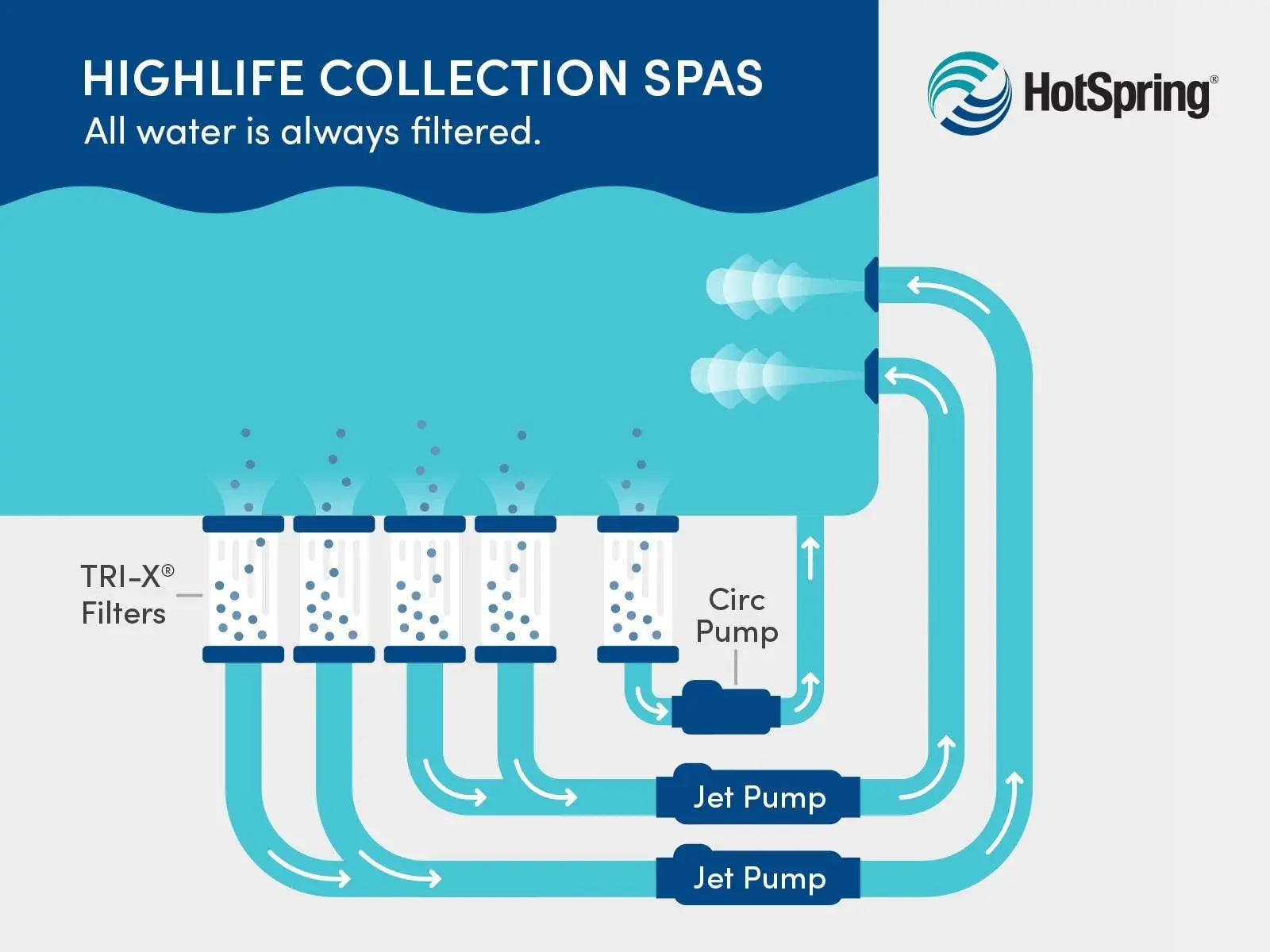
Traditional Chlorine Maintenance
Traditional chlorine care gives you direct control over sanitizer additions. It’s a familiar process that can be straightforward once you understand your hot tub’s water needs.
However, chlorine demand can change after frequent use, gatherings or extended periods between soaks. Owners need to test the water and adjust sanitizer levels accordingly.
Saltwater Maintenance
With a FreshWater Salt System, the generator produces chlorine from salt. The owner selects an appropriate output level and checks that the system is maintaining the required sanitizer residual.
The FreshWater system includes reminders to check water conditions and replace the cartridge when necessary. Its titanium cartridge generally requires replacement approximately every four months, subject to the model and operating conditions.
You may still need to add chlorine manually after heavy use, adjust water balance, address high calcium levels or perform additional treatment if the water is not meeting the manufacturer’s recommendations.
IMPORTANT — A saltwater generator does not clean your filters, remove every contaminant or eliminate the need for water testing. Whatever system you choose, properly maintained sanitizer levels and balanced water remain essential.
4. Do Saltwater Hot Tubs Feel Better on Your Skin?
Water feel is another reason many buyers consider a saltwater hot tub.
FreshWater Salt System water is often described as softer and more natural-feeling. Because the system generates chlorine rather than relying entirely on manual additions, owners may also notice less chemical handling as part of their routine.
That doesn’t mean saltwater is guaranteed to prevent dry skin, eye discomfort or irritation. Chlorine levels, pH, temperature, water balance and individual sensitivity can all affect comfort.
A traditional chlorine hot tub with correctly balanced water can also provide a comfortable soaking experience.
What About the Chlorine Smell?
A noticeable chemical odour is not simply proof that a hot tub has plenty of chlorine. Combined chlorine compounds, formed when chlorine reacts with contaminants, can contribute to unpleasant odours.
The best response is proper testing, filtration and treatment according to the spa and sanitizer instructions—not assuming that saltwater eliminates these issues automatically.
5. How Often Do Saltwater and Chlorine Hot Tubs Need a Water Change?
Changing hot tub water is a normal part of ownership. Over time, contaminants and dissolved substances build up, even when the water is regularly sanitized.
For a traditional chlorine hot tub, a commonly recommended interval is approximately every three to four months. Some spas may require more frequent water changes depending on water condition and usage.
The FreshWater Salt System is designed to help maintain spa water for up to 12 months when the system is operated correctly and water chemistry and usage remain within appropriate conditions.
This is a potential advantage for homeowners who want fewer drain-and-refill cycles, particularly during colder months in Ontario.
| Water-care approach | Typical water replacement | Important consideration |
|---|---|---|
| Traditional chlorine | About every 3–4 months | May be sooner with heavy use or deteriorating water quality |
| FreshWater Salt System | Up to 12 months | Depends on proper maintenance, bather load and water chemistry |
If water becomes difficult to balance, persistently cloudy or unsuitable for use, it may need additional treatment or replacement earlier than the expected interval.
6. What Is the FreshWater Salt System?
The FreshWater Salt System is a hot tub water-care solution offered on compatible Hot Spring and Caldera spas. It uses a replaceable titanium cartridge to generate chlorine from a small concentration of salt in the water.
Its goal is to simplify sanitizer generation while providing clean, clear and natural-feeling water with fewer manual chlorine additions.
How the FreshWater Salt System Works
- Prepare the water: Fill the spa and adjust water chemistry according to the system’s start-up requirements.
- Add the required spa salt: Use the amount specified for your spa and water volume.
- Generate chlorine: The titanium cartridge converts salt into chlorine to help sanitize the water.
- Check and adjust: Test the water and adjust the system’s chlorine output as needed.
- Replace the cartridge: Follow system reminders and the owner’s manual for cartridge replacement.
FreshWater cartridges typically require replacement approximately every four months. A three-pack can provide up to a year’s supply of cartridges, depending on conditions and system use.
Your spa’s source-water calcium level is also important. FreshWater systems have specific water-chemistry requirements, so the owner’s manual should guide start-up and ongoing treatment.
Read Pioneer’s dedicated FreshWater Salt System guide
7. What Is FreshWater IQ, and How Is It Different?
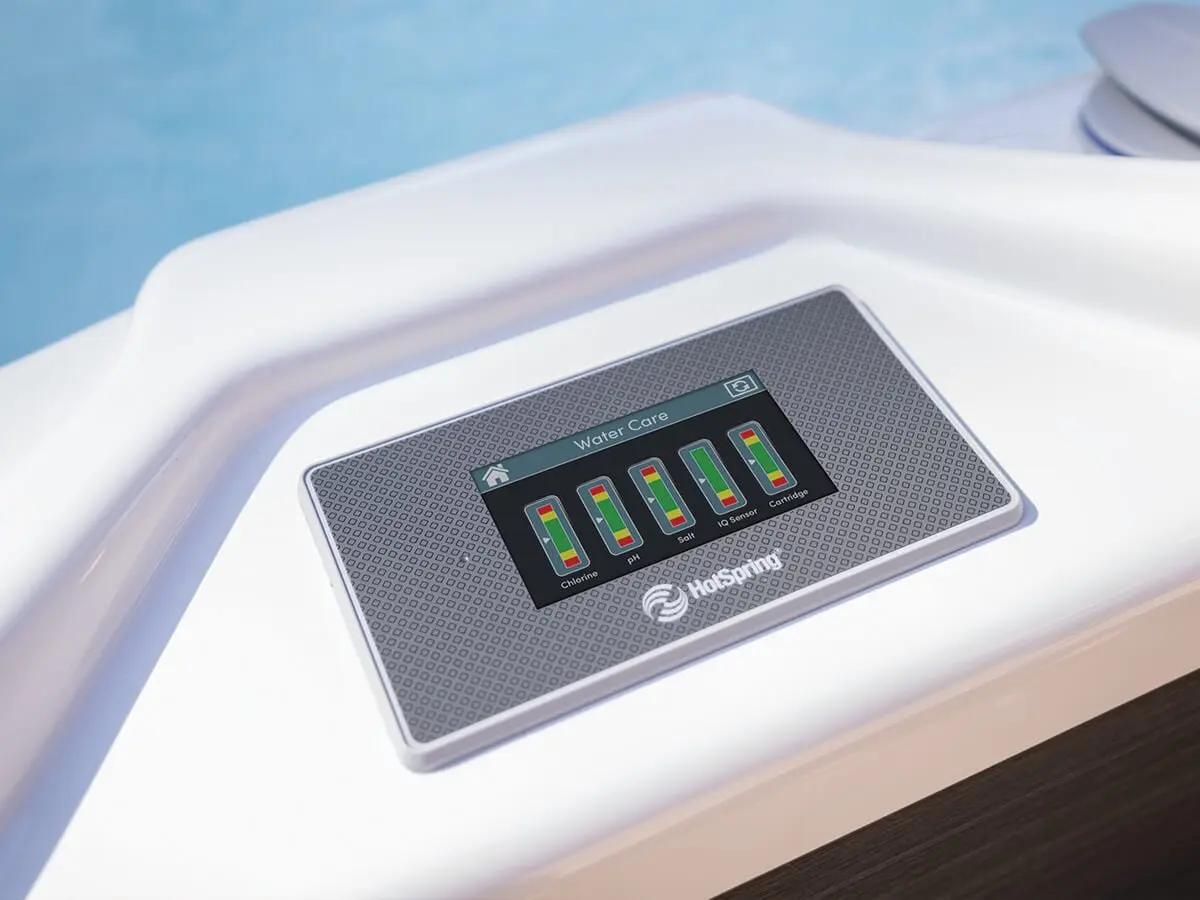
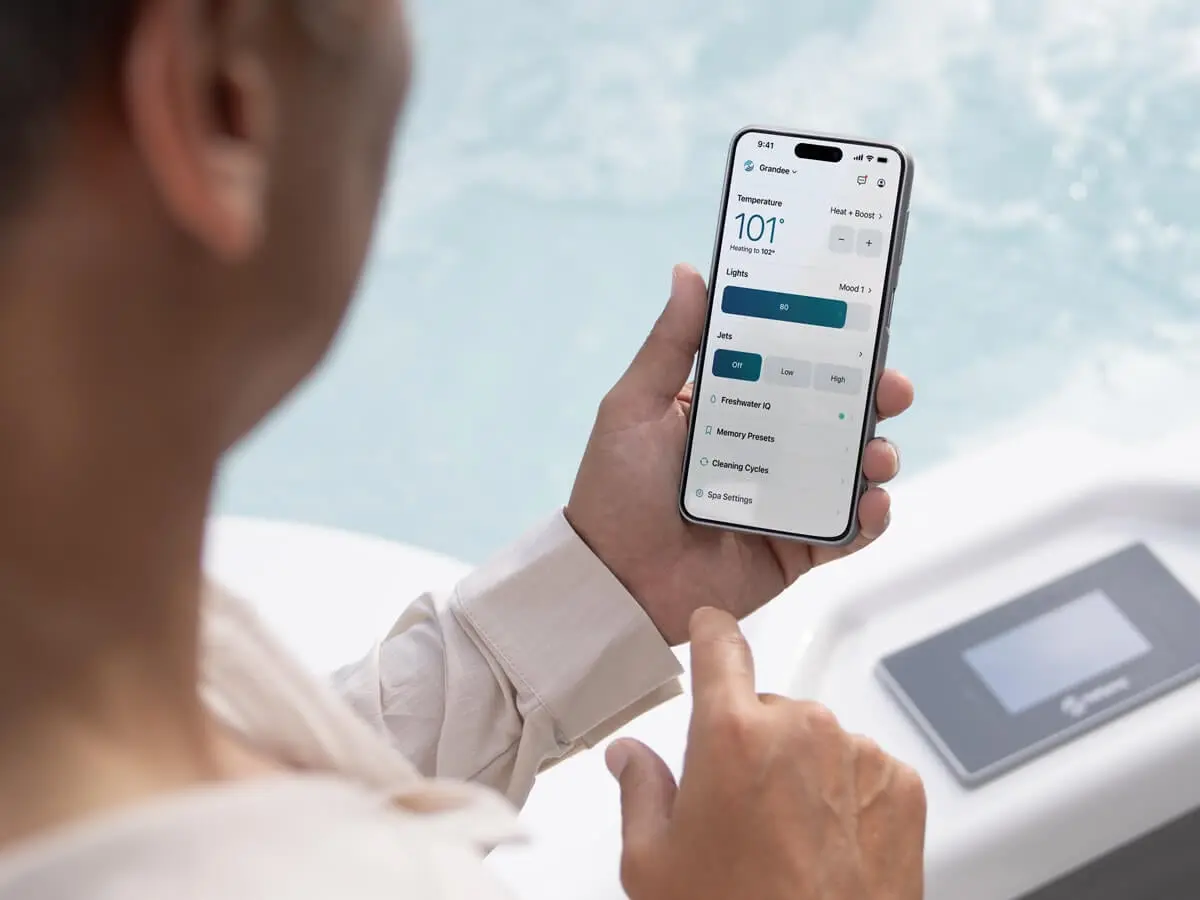
FreshWater IQ builds on the salt-to-chlorine system by adding smart water monitoring and, on compatible configurations, precision dosing technology.
Rather than relying solely on periodic manual checks, the compatible Smart Monitoring System measures important water parameters and provides recommendations through the spa’s controls.
| Technology | What it does |
|---|---|
| FreshWater Salt System | Generates chlorine from salt through a replaceable cartridge |
| Smart Monitoring | Checks chlorine, pH and salt levels and displays recommendations |
| Precision Dosing | On compatible systems, allows one-touch dosing of supported water-balancing products |
| Connected App Features | May provide remote water-care information and controls when supported equipment is installed |
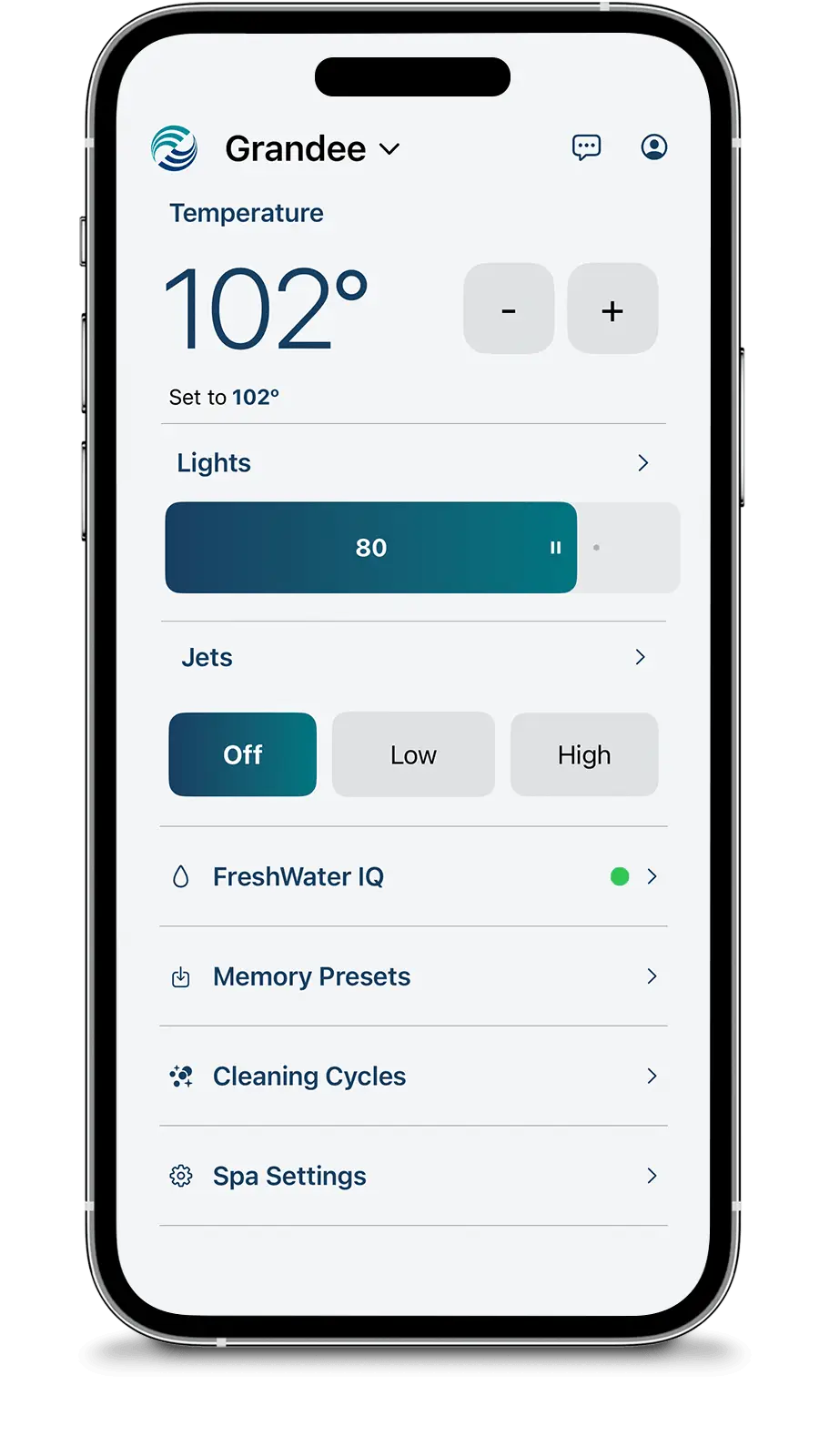
Current FreshWater IQ configurations can combine salt generation, hourly smart monitoring and supported one-touch dosing. However, these features are not included on every hot tub or every FreshWater-equipped model.
Availability varies by model, collection, year and installed options. Some components may be sold separately. Even with monitoring and dosing, owners remain responsible for checking the water and following the manufacturer’s maintenance instructions.
Ask your Pioneer Family Pools representative which FreshWater and FreshWater IQ capabilities are supported by the hot tub you’re considering.
8. Which Hot Spring and Caldera Hot Tubs Offer Saltwater Care?

Pioneer Family Pools offers Hot Spring and Caldera hot tubs, including collections with compatible saltwater-care options.
Because water-care compatibility varies, it is important to look beyond a general collection name and confirm the exact model and equipment configuration.
| Brand | Collections to explore | What to confirm |
|---|---|---|
| Hot Spring | Highlife, Limelight and selected Hot Spot configurations | Salt System compatibility and available FreshWater IQ monitoring or dosing options |
| Caldera | Utopia, Paradise and selected Vacanza configurations | FreshWater Salt System compatibility and supported IQ features |
For example, the Hot Spring Highlife and Limelight collections offer configurations with more advanced FreshWater IQ capability, while other compatible collections may support salt generation without the same monitoring and dosing features.
The important thing is to match your desired water-care experience with a compatible hot tub rather than assume every spa has identical equipment.
Browse Pioneer’s complete hot tub collection
9. Saltwater vs Chlorine Hot Tub Costs: What Should You Budget For?
Saltwater systems are often marketed around convenience, but choosing the more convenient option doesn’t necessarily mean choosing the least expensive option.
To compare ownership costs fairly, look at both the initial purchase and the ongoing supplies.
| Cost category | Saltwater system | Traditional chlorine |
|---|---|---|
| Equipment | Compatible generator and any required accessories or upgrades | Generally no salt generator required |
| Sanitizer | Salt, replacement cartridges and occasional supplemental chlorine as needed | Regular purchases of approved chlorine sanitizer |
| Testing and balancing | Testing supplies and water-balancing products | Testing supplies and water-balancing products |
| Water replacement | Potentially fewer drain-and-refill cycles | More frequent drain-and-refill cycles are typically expected |
| Additional equipment | Possible monitoring, dosing or replacement-system costs | Optional dispensing or monitoring accessories |
Traditional chlorine care generally has a lower initial equipment cost, whereas a saltwater system may offer convenience and reduced water replacement over time. Whether it is cheaper overall depends on product pricing, cartridge expenses, usage and water-care habits.
Avoid comparing only the cost of chlorine to the cost of salt. A salt system also has components that eventually need replacement.
OUR RECOMMENDATION — Ask for a water-care estimate based on the exact spa and system you’re considering. Compare the initial equipment cost, expected annual consumables, cartridge replacement and routine maintenance before making a decision.
10. Does Ontario’s Water Quality Affect Saltwater Hot Tubs?
Your home’s source water matters regardless of which sanitizer system you choose.
Different communities and properties across Ontario can have different levels of calcium hardness, metals and other dissolved substances in their fill water. These can affect balancing requirements and equipment performance.
FreshWater Salt Systems have specific calcium-hardness requirements. Depending on your source water, preparation may involve approved calcium-reduction methods or other treatments identified in the system’s instructions.
For traditional chlorine spas, source-water chemistry also matters. Water that is too acidic, too alkaline or poorly balanced may cause discomfort or create scaling and equipment issues.
Before choosing a water-care system, have your source water evaluated and ask your Pioneer Family Pools representative which treatment approach is appropriate for the spa you plan to purchase.
What About Winter Hot Tub Maintenance?
Winter is one of the most enjoyable times to use a hot tub in Ontario, but it can also make draining and refilling less convenient.
The possibility of longer intervals between water changes can be especially attractive during colder weather. However, a saltwater system still needs regular monitoring, filter care and appropriate chlorine levels throughout the winter.
Regardless of your water-care system, proper winter operation, circulation and freeze protection remain important. Follow the manufacturer’s instructions for cold-weather use.
11. Hot Tub Water-Care Safety: What Every Owner Should Know
Both saltwater and traditional chlorine systems require proper sanitization. Clear-looking water alone does not prove that a hot tub is safe to use.
Health Canada recommends maintaining a free available chlorine level of 3–5 parts per million (ppm) in residential spas and hot tubs and testing sanitizer and water balance regularly. Always follow applicable registered-product labels, your spa’s owner’s manual and local guidance.
Use only water-care products approved for your specific system. Some chemicals commonly associated with conventional hot tubs are not compatible with certain salt-generation or smart-monitoring systems.
Health Canada swimming pool and spa chemical safety
12. Which System Should You Choose? A Quick Buying Guide
Rather than asking which system is universally better, think about which ownership routine fits your lifestyle.
| Your priority | System worth considering | Why |
|---|---|---|
| Less frequent manual chlorine dosing | Saltwater | The generator produces chlorine from salt |
| Lower initial water-care equipment cost | Traditional chlorine | No salt generator is typically required |
| Potentially fewer water changes | Compatible FreshWater Salt System | Water can last up to a year under suitable conditions |
| Direct sanitizer dosing control | Traditional chlorine | Owner adds approved sanitizer according to water testing |
| Smart water monitoring and dosing | Compatible FreshWater IQ configuration | Supported equipment can monitor and help adjust water care |
If convenience is your top priority, a compatible saltwater system may be worth the additional investment. If you prefer straightforward manual water care and lower initial equipment costs, traditional chlorine can remain an excellent choice.
Most importantly, choose a hot tub you love using and a water-care routine you can maintain consistently.
13. Questions to Ask Before Buying a Saltwater or Chlorine Hot Tub
- Is the hot tub compatible with a saltwater generation system?
- Is the salt system included, optional or an additional purchase?
- Which FreshWater IQ monitoring and dosing features are available on this exact model?
- What are the expected annual sanitizer and cartridge costs?
- How frequently should I test, balance and replace the water?
- Does my home’s source water require any special treatment?
- Which chemicals are approved for the water-care system?
- What maintenance is needed after heavy use or when entertaining guests?
- Can my existing hot tub be converted, or is the system restricted to certain models?
- What product support and water-testing services are available through Pioneer Family Pools?
14. Saltwater vs Chlorine Hot Tubs: Frequently Asked Questions
1. Are Saltwater Hot Tubs Chlorine-Free?
No. Saltwater hot tubs use chlorine generated from dissolved salt. The system changes how chlorine is supplied to the water, but chlorine is still the sanitizer.
2. Are Saltwater Hot Tubs Easier to Maintain?
They can reduce the frequency of manual chlorine additions. However, testing, balancing, filter cleaning and cartridge maintenance are still required. Saltwater does not mean maintenance-free.
3. Is Saltwater Better for Sensitive Skin?
Some users prefer the feel of salt-system water, but comfort varies between individuals. Proper chlorine levels, balanced pH and overall water quality are important with both systems. Saltwater is not a guarantee against skin irritation.
4. How Often Do You Change the Water in a Saltwater Hot Tub?
A properly maintained FreshWater Salt System can help keep water clean and clear for up to 12 months. Actual water life depends on usage, bather load, source water and chemistry. Some spas require earlier replacement.
5. How Often Should You Change the Water in a Chlorine Hot Tub?
Traditional chlorine hot tubs often require a drain and refill approximately every three to four months, depending on usage, water condition and the manufacturer’s instructions.
6. Is a Saltwater Hot Tub More Expensive?
It may have higher initial equipment costs and ongoing cartridge expenses. Traditional chlorine systems generally require regular sanitizer purchases. Overall costs depend on the model, supplies, usage and frequency of water changes.
7. How Long Does a FreshWater Salt Cartridge Last?
FreshWater Salt System cartridges typically require replacement approximately every four months. The actual interval depends on the system, water conditions and manufacturer guidance.
8. Can You Add Chlorine to a Saltwater Hot Tub?
Yes, some compatible saltwater systems allow supplemental chlorine when needed. However, you must use only products permitted by the manufacturer’s instructions. Certain chlorine formulations and other water-care products are not suitable for every salt system.
9. Can I Convert My Existing Hot Tub to Saltwater?
Possibly, but compatibility depends on the exact brand, model, production year and water-care equipment. Do not assume that adding salt will convert a conventional hot tub into a saltwater spa. Ask a dealer to verify compatibility before making changes.
10. What Is the Difference Between FreshWater Salt and FreshWater IQ?
FreshWater Salt generates chlorine from salt. Compatible FreshWater IQ configurations add smart water monitoring and may support one-touch precision dosing. Available features depend on the spa model and installed equipment.
11. Do Saltwater Hot Tubs Work in Canadian Winters?
Compatible saltwater systems can be used in hot tubs designed for year-round operation. However, winter performance depends on proper spa operation, filtration, water care and freeze protection. Follow the manufacturer’s instructions for cold-weather use.
12. Which Water-Care System Is Better for a Family Hot Tub?
Both systems can work well for families. A salt system may appeal to households seeking convenient sanitizer generation, while a traditional chlorine system gives owners straightforward dosing control. Frequent use can increase sanitizer demand with either system, so testing and maintenance remain important.
The Verdict: Saltwater or Chlorine?
There isn’t one water-care system that’s right for every hot tub owner.
Choose a saltwater hot tub if you value convenient chlorine generation, potentially longer-lasting water and the option of advanced monitoring technology on compatible models.
Choose traditional chlorine care if you prefer a familiar routine, direct sanitizer dosing and generally lower initial water-care equipment costs.
Whichever you choose, consistent testing, proper sanitation and routine maintenance are the foundation of a great hot tub ownership experience.
Find the Right Hot Tub and Water-Care System at Pioneer Family Pools
Choosing a hot tub is about more than the model itself. It’s also about finding the right combination of comfort, features and ongoing care for your lifestyle.
At Pioneer Family Pools, our team can help you compare Hot Spring and Caldera hot tubs, explore compatible FreshWater Salt System options and understand the maintenance involved with each water-care approach.
Visit your nearest Pioneer Family Pools showroom to discuss compatible models, water-care options and current availability.
Explore Hot Spring and Caldera hot tubs