Home Sauna Buying Guide Ontario: Traditional vs Infrared vs Hybrid
Advice - Sauna
Thinking about a home sauna in Niagara or elsewhere in Ontario? Here is your Home Sauna Buying Guide for Ontario: Start with three decisions: the kind of heat you enjoy, where the sauna will go, and what your home can safely support. Traditional, infrared and hybrid saunas offer different experiences, and the best choice is not always the largest or most expensive model.
This home sauna buying guide for Ontario is designed to help homeowners compare sauna styles, indoor and outdoor placement, space and electrical requirements, installation expenses, and the Tylö collections available through Pioneer Family Pools. Whether you are planning an indoor wellness space or a backyard retreat, understanding these considerations will help you make a more informed purchase.
Quick answer: Is a traditional or infrared sauna better? It depends. Choose traditional heat if you prefer hotter room air and the classic stone-heater experience. Choose infrared if you prefer radiant warmth and a lower air temperature. Consider hybrid if you want both heating options in one approved configuration.
Which Sauna Type Is Right for You? A Quick Decision Table
The best sauna for your home depends on how you prefer to experience heat. Before comparing sizes, controls or additional features, it helps to understand the differences between the three main sauna types.
| Decision Factor | Traditional Sauna | Infrared Sauna | Hybrid Sauna |
|---|---|---|---|
| Heating Method | Heater warms the air and sauna stones | Radiant panels warm occupants and surfaces | Combines approved traditional and infrared modes |
| Typical Experience | Hotter surrounding air; water on suitable stones if permitted | Lower surrounding air temperature with radiant warmth | A choice of heat styles according to the model's instructions |
| Best Starting Point | You prefer a classic high-heat sauna session | You prefer a milder surrounding air temperature | Different household members prefer different heating styles |
| Tylö Collection | Halmstad, Reflection or outdoor Lulea | Kiruna | Kiruna Hybrid |
| Buying Considerations | Heater, ventilation and required clearances | Panel layout, controls and electrical supply | Approved heating modes, controls and electrical needs |
Before choosing a model, consider the heat you would actually enjoy using regularly. For a closer look at the two main heating styles, explore our Traditional vs. Infrared Saunas article.
Traditional vs Infrared vs Hybrid: Heat and Experience
Traditional Saunas: High-Heat Air and Sauna Stones
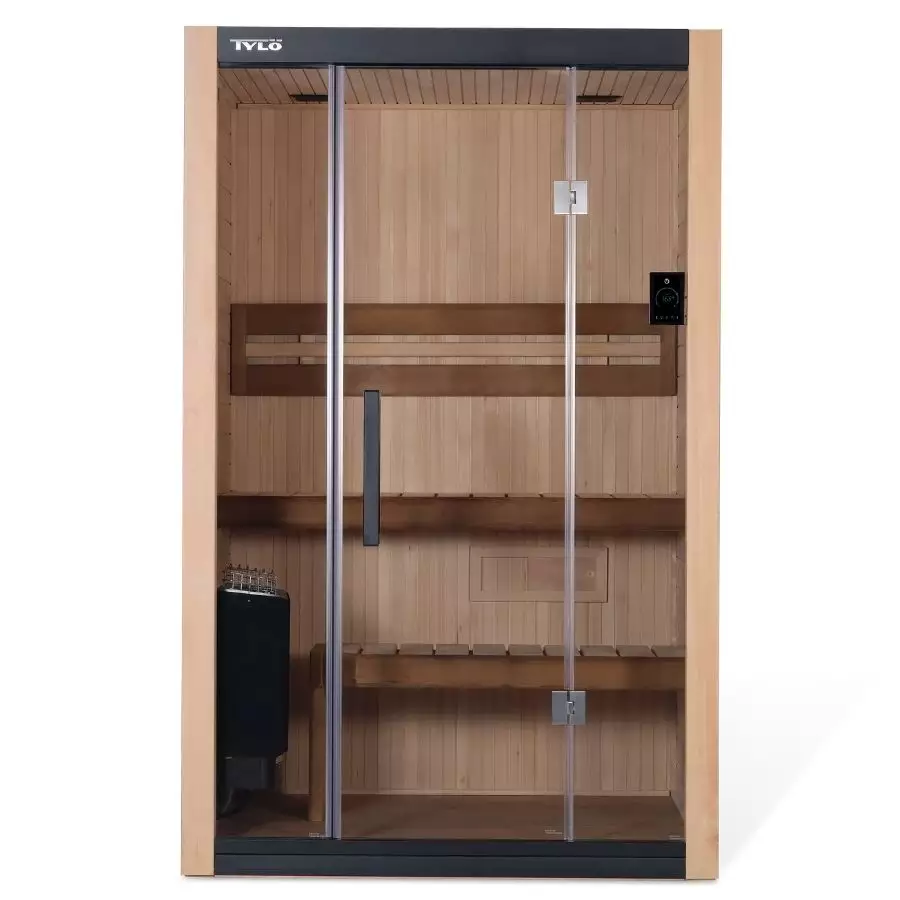
A traditional sauna heats the room through an electric heater and sauna stones. Many people enjoy the enveloping hot air and the option to add a little water to approved stones, following the heater instructions.
The heater, controls, ventilation and seating design all influence comfort. Do not assume water can be used with every heater or operating mode.
Infrared Saunas: Radiant Warmth and a Milder Air Temperature
An infrared sauna uses heating panels to provide radiant warmth. Compared with a traditional sauna, it typically operates with a lower surrounding air temperature.
Infrared saunas can appeal to homeowners who prefer radiant heat rather than the more intense air temperature associated with traditional saunas. When comparing models, look at panel coverage, temperature controls, warm-up behaviour and electrical specifications.
Hybrid Saunas: Flexibility in One Room

A hybrid sauna combines traditional and infrared heating equipment in a compatible enclosure. It offers flexibility for households where different people enjoy different types of heat.
However, hybrid systems may have additional electrical, clearance and control requirements. Confirm the approved operating modes in the manufacturer's manual, including whether the heating systems must be operated separately.
Buying distinction: Sauna selection should focus on the heating experience, product quality, installation suitability and features rather than unsupported promises of detoxification or lasting weight loss. Sweating causes temporary fluid loss, not necessarily fat loss.
Indoor vs Outdoor Sauna Placement for Ontario Weather

For Ontario homeowners, an indoor sauna can provide convenient year-round access in a suitable basement, home gym or spare room. An outdoor sauna creates a dedicated backyard retreat, but requires additional attention to the installation site, weather exposure and winter access.
Ontario's changing seasons make placement particularly important. An outdoor sauna should be specifically approved for outdoor use by its manufacturer and installed according to the applicable instructions.
| Planning Question | Indoor Sauna | Outdoor Sauna |
|---|---|---|
| Where will it sit? | Approved room with safe access and suitable flooring | Stable base or foundation with suitable drainage |
| Ontario winter access | No exposed outdoor walking route required | Plan for snow, ice and lighting along the path |
| Moisture and airflow | Ventilation and nearby finishes must be considered | Model-specific vents, roof and weather protection |
| Approvals | Electrical requirements and possible interior alterations | Electrical requirements and potential building or zoning setbacks |
| Model suitability | Check the manufacturer's indoor-use designation | Choose manufacturer-approved outdoor construction |
Tylö offers indoor sauna collections such as Kiruna, Kiruna Hybrid, Halmstad and Reflection, while its Lulea collection is designed for outdoor use. An indoor-only sauna should not be installed outdoors, even if the location is partially sheltered.
Size, Clearance, Ventilation, Electrical and Permits
Measuring the available space is one of the most important steps in choosing a home sauna. Confirm the assembled dimensions, ceiling height, door swing, access through hallways and staircases, required clearances and space needed for servicing.
The published cabinet dimensions are not necessarily the final installation footprint. Requirements vary by model, so always review the latest installation manual.
Example Tylö Sauna Dimensions and Electrical Requirements
The following examples illustrate the differences between selected configurations. Specifications, electrical variants and availability should be confirmed for the exact model before purchasing.
| Example Model | Capacity | Published Dimensions | Electrical Configuration |
|---|---|---|---|
| Kiruna 2 Infrared | 2 people | 42" D × 51" W × 78" H | 120V / 15A |
| Halmstad 2 Traditional | 2 people | 51" D × 51" W × 81" H | 120V / 15A or 20A variant |
| Kiruna Hybrid 2 | 2 people | 51" D × 51" W × 81" H | 120V / 15A or 20A variant |
| Lulea 3 Outdoor | 3 people | 85" D × 93" W × 94" H (roof footprint) | 240V; amperage depends on exact SKU |
These figures are planning references only. For example, the Kiruna 2 specification sheet includes additional clearance requirements. The latest manufacturer manual for the selected SKU should always take precedence over a general comparison table.
Ventilation, Drainage and Moisture Management
Sauna ventilation should follow the room and heater manufacturer's instructions. Air inlets and outlets must remain unobstructed, and nearby walls, floors and finishes should be suitable for the intended environment.
Outdoor installations also require attention to site drainage, weather exposure and any model-specific roof or exterior maintenance recommendations.
Electrical Work and Municipal Approvals in Ontario
Each sauna has its own electrical operating requirements. Some compact models use 120V configurations, while larger heaters and outdoor models may require 240V.
An existing electrical outlet or circuit should not automatically be assumed suitable. An Ontario Licensed Electrical Contractor should confirm the applicable circuit, panel capacity, wiring, notifications and inspections.
Homeowners should also check with their municipality regarding any building permits, zoning restrictions or setback requirements that may apply to their installation.
Installation Timeline and Total Budget Components
There is no single installed price that applies to every home sauna in Ontario. The sauna itself is only one component of the overall project. A prepared indoor space may require considerably less site work than a new outdoor installation.
Before committing to a model, ask for an itemized estimate and understand what is included in the purchase price.
| Budget Item | What to Clarify Before Purchasing |
|---|---|
| Sauna and Controls | Model, heater, control panel, accessories and warranty |
| Delivery and Access | Freight, stairs, doorways, unloading and delivery arrangements |
| Base or Room Preparation | Flooring, foundation, ventilation, drainage and weatherproofing |
| Electrical Work | Electrical contractor quote, circuit or panel work, notifications and inspections |
| Assembly and Finishing | Installer scope, site labour and optional features |
| Recurring Expenses | Electricity, cleaning, maintenance and replacement parts |
A compact sauna kit can sometimes be assembled relatively quickly once the site is prepared. However, electrical work, municipal approvals, delivery, weather and contractor scheduling can affect the overall timeline.
Ask Pioneer Family Pools which services are included in your quote and which site-preparation or electrical responsibilities must be arranged separately.
Ongoing Electricity Use, Cleaning and Maintenance
Sauna operating costs depend on the heater or infrared panels, heating time, temperature settings, insulation, outdoor conditions and frequency of use.
Average power draw (kW) × Operating hours = Electricity consumption (kWh)
Multiply the estimated electricity consumption by your effective electricity rate to estimate the energy portion of the operating cost. Actual consumption can vary because sauna heaters may cycle during a session.
Routine care generally includes cleaning approved surfaces, allowing the room to dry appropriately after use, keeping ventilation openings clear and checking the condition of doors, benches and heater components.
Outdoor saunas may also require regular inspection of weather seals, roofing, drainage and exposed materials. Always follow the specific manufacturer's care instructions rather than using harsh cleaners or unapproved surface treatments.
For electricity cost planning, the Ontario Energy Board Bill Calculator can provide additional information about Ontario electricity pricing.
Why Tylö Saunas Stand Out for Ontario Homes
Swedish Craftsmanship and Premium Materials
Founded in Sweden in 1949, Tylö brings more than 75 years of Scandinavian sauna craftsmanship to the home. Its sauna collections combine carefully selected woods, thoughtful construction and modern heating technology to create comfortable sauna experiences.
Depending on the model, Tylö uses materials such as clear hemlock or aspen, insulated wall and ceiling panels, and tempered glass. Select configurations also incorporate modern heater technology, convenient controls and additional comfort features.
Materials and equipment vary by collection, so it is important to compare the exact sauna model rather than assuming every sauna uses the same construction.
Built with Ontario's Climate in Mind
For homeowners considering an outdoor sauna, weather suitability is particularly important. Ontario experiences humid summers, changing temperatures, snow and prolonged periods of cold weather.
The Tylö Lulea collection is designed specifically for outdoor installation. Its construction includes clear hemlock, thermal insulation, a weather-resistant steel roof and tempered privacy glass.
These features make the Lulea an appealing option for Ontario backyards, provided it is installed on a suitable base and maintained according to manufacturer instructions. Drainage, electrical requirements, weather exposure and safe winter access still require careful planning.
Discover Tylö Saunas at Pioneer Family Pools
Pioneer Family Pools offers Tylö saunas through its Southern Ontario locations, helping homeowners explore premium sauna options for indoor and outdoor spaces.
Whether you are interested in traditional heat, infrared warmth or the flexibility of a hybrid system, our team can help you compare available models, discuss features and identify important installation questions before making your purchase.
Compare Tylö Sauna Collections and Features
Tylö offers traditional, infrared, hybrid and outdoor sauna configurations. Each collection is designed around a different combination of heating style, space, features and installation requirements.
| Tylö Collection | Heating Style and Setting | What to Consider |
|---|---|---|
| Kiruna | Infrared; indoor | Infrared panel coverage, controls and electrical configuration |
| Kiruna Hybrid | Traditional and infrared; indoor | Approved heating modes, electrical variant and control options |
| Halmstad | Traditional; indoor | Heater configuration, seating and installation clearances |
| Reflection | Premium traditional; indoor | Design, layout, premium features and installation needs |
| Lulea | Traditional; outdoor | Outdoor foundation, roofing, electrical and weather requirements |
Depending on the model, Tylö offers technologies and features such as IntelliAir heating, Thermosafe surfaces, Aspire or Bliss controls, app connectivity, lighting and Bluetooth audio. These are model-dependent features and should be confirmed for the specific configuration.
Explore the Pioneer Family Pools Sauna Collection or review the Tylö Product Brochure for additional information about the available collections.
Sauna Safety: Who Should Ask a Clinician First?
Sauna heat is not appropriate for everyone. Ask a clinician before use if you are pregnant, have cardiovascular or blood-pressure conditions, have trouble regulating body temperature, have a history of fainting, or take medicines that affect alertness, hydration or heat tolerance.
Follow the manufacturer's recommendations regarding session duration and temperature. Avoid alcohol, stay appropriately hydrated, and leave the sauna immediately if you feel dizzy, faint or unwell.
Keep children supervised, follow heater and seating limits, and never use the sauna to store combustible materials.
Home Sauna Buying Checklist
Before visiting a showroom or requesting a quote, use this checklist to help prepare for your sauna purchase.
- Choose the heating experience you prefer: traditional, infrared or hybrid.
- Confirm how many people will regularly use the sauna.
- Measure the available space, ceiling height, access path and door swing.
- Check required clearances and obtain the latest model-specific installation manual.
- Confirm whether the model is approved for indoor or outdoor installation.
- Have a Licensed Electrical Contractor assess the relevant electrical requirements.
- Check applicable municipal building permits, zoning and setback requirements.
- Request an itemized quote for the sauna, delivery, installation and site work.
- Review controls, heater options, warranty, cleaning and maintenance instructions.
- Confirm the exact model specifications and current availability.
- Contact your nearest Pioneer Family Pools showroom to discuss available sauna models.
Home Sauna Buying FAQs for Ontario Homeowners
What Is the Difference Between Infrared and Traditional Saunas?
Traditional saunas use a heater and stones to warm the surrounding air, while infrared saunas use radiant heating panels. Infrared models generally operate at lower air temperatures. The better option depends on your preferred heating experience.
Is a Hybrid Sauna Better Than Infrared?
A hybrid sauna offers the flexibility of both approved traditional and infrared heating modes. It can be a useful option for households with different preferences, although the additional equipment may create more installation considerations.
How Much Space Do I Need for a Home Sauna?
The required space depends on the exact model, seating capacity and manufacturer-specified clearances. For example, the published Kiruna 2 cabinet measures approximately 42 inches deep, 51 inches wide and 78 inches high, but additional room may be needed for installation and access.
Can a Sauna Be Installed Outdoors in Ontario?
Yes, provided the model is approved by its manufacturer for outdoor installation. Homeowners should consider foundation requirements, drainage, weather protection, electrical work, winter access and applicable municipal rules.
Do I Need an Electrician or Permit for a Home Sauna?
Electrical requirements vary by sauna model. An Ontario Licensed Electrical Contractor can assess the necessary circuit and wiring. Depending on the project, electrical notifications, inspections or municipal building and zoning approvals may also apply.
How Long Does It Take to Install a Home Sauna?
Installation timelines depend on site readiness, electrical requirements, delivery access, municipal approvals and contractor scheduling. Request a model-specific installation plan before establishing a completion date.
How Much Electricity Does a Sauna Use?
Electricity use varies by heater or panel configuration, session length, temperature and frequency of use. Multiplying average power draw in kilowatts by operating hours provides an estimated kilowatt-hour figure, which can then be used to estimate electricity costs.
Are Home Saunas Safe to Use Regularly?
Many adults can use saunas, but heat exposure may not be appropriate for everyone. Follow the manufacturer's operating instructions and consult a clinician if you have relevant medical concerns or take medications that could affect heat tolerance.
How Long Does a Home Sauna Last?
The lifespan of a home sauna depends on the materials, installation environment, frequency of use and maintenance. Ask about the manufacturer's warranty, replacement parts and recommended care procedures when evaluating a model.
Explore Home Saunas at Pioneer Family Pools
Pioneer Family Pools helps Ontario homeowners explore backyard leisure and home wellness products, including premium Tylö sauna collections.
Whether you are considering a compact infrared sauna, a traditional indoor model or an outdoor sauna for your backyard, our team can help you compare available configurations and understand important purchasing considerations.
Visit your nearest Pioneer Family Pools location to discuss the options and confirm current showroom availability.
Find Your Nearest Pioneer Family Pools Location
Ready to Choose a Sauna for Your Ontario Home?
Whether you are creating an indoor wellness space or adding a sauna to your backyard, Pioneer Family Pools can help you compare traditional, infrared and hybrid Tylö options.
Explore the available collections online or connect with our team to discuss product features, space requirements and installation considerations before purchasing.